
Hello, I’m Thorsten and I will be your tour guide today.

Here’s a little bit about me: I am (still) a German national but lived the majority of my life in the UK. To keep my Germanness (and Haribo addiction) alive, I have travelled extensively throughout Germany and have now completed Germany. Ok, not completed but I have, as of June ’25, visited all 16 Federal States of Germany. And with a daily average of around 25000 steps when I am visiting Germany, I feel I have most definitely done the legwork (see what I did there).
I’m generally at my happiest when I wander (or drive) semi-aimlessly around simply to discover anything relating to architecture, design, art or industrial heritage, ideally a combination of two or even three of the above which isn’t THAT unusual.
Being truly bilingual means I can explain the finer details and give you that additional insight and having lived long enough in the UK, I may even crack the odd (funny) joke.
I have worked in the design industry for over 30 years and still run a little online shop so I’m also extremely well suited to advise you on any souvenir shopping.
So, let me show you Germany.
Most-loved thing about travelling?
Simply to discover things, be it great big buildings or little architectural details. My favourite thing is to walk/drive semi aimlessly around with a rough destination in mind but with the freedom to stray off any planned route.
Favourite German city and or landmark?
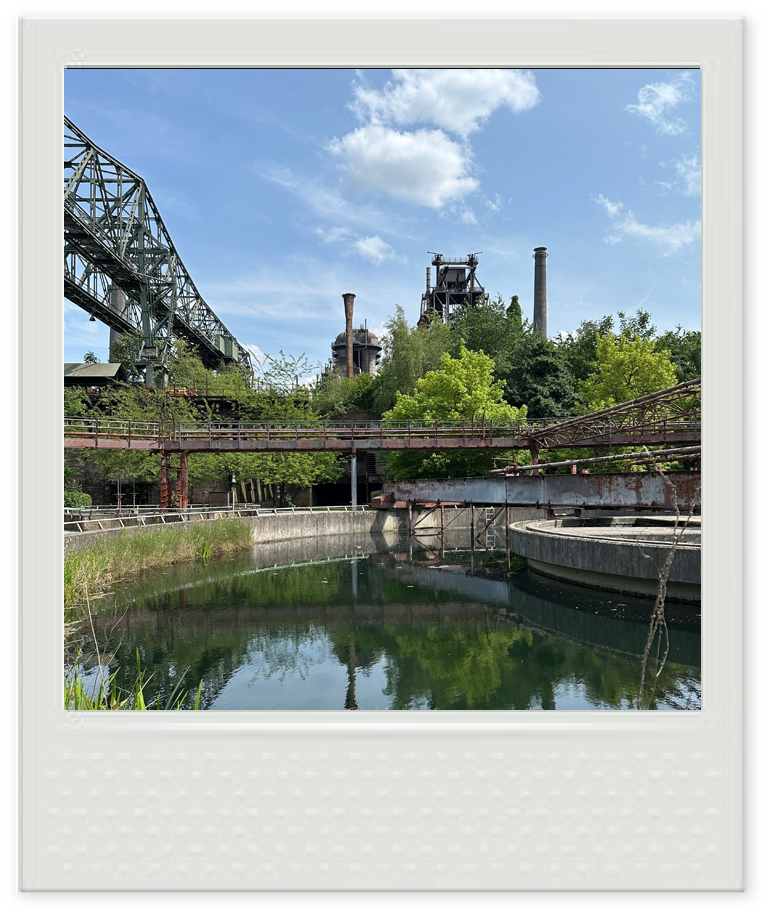
If I have to choose it‘d be the Landschaftspark Duisburg-Nord (which is on the itinerary for my first tour). It‘s an old coal and steel production plant which has been turned into a public park in 1991. It kept most of the existing structures and uses plants to clean and heal the contaminated soil. It ticks so many boxes for me.
What is your favourite mode of public transport?
Oh that’s an easy one. The Schwebebahn (suspension railway) in Wuppertal, always and forever. I do have to admit that until last year I didn’t know that there is in fact another suspension railway in Germany from around the same period. This one, in Dresden, is less public transport and more tourist attraction as it’s considerably slower going up a hill but it still has the old carriages.
What is your number one German food?
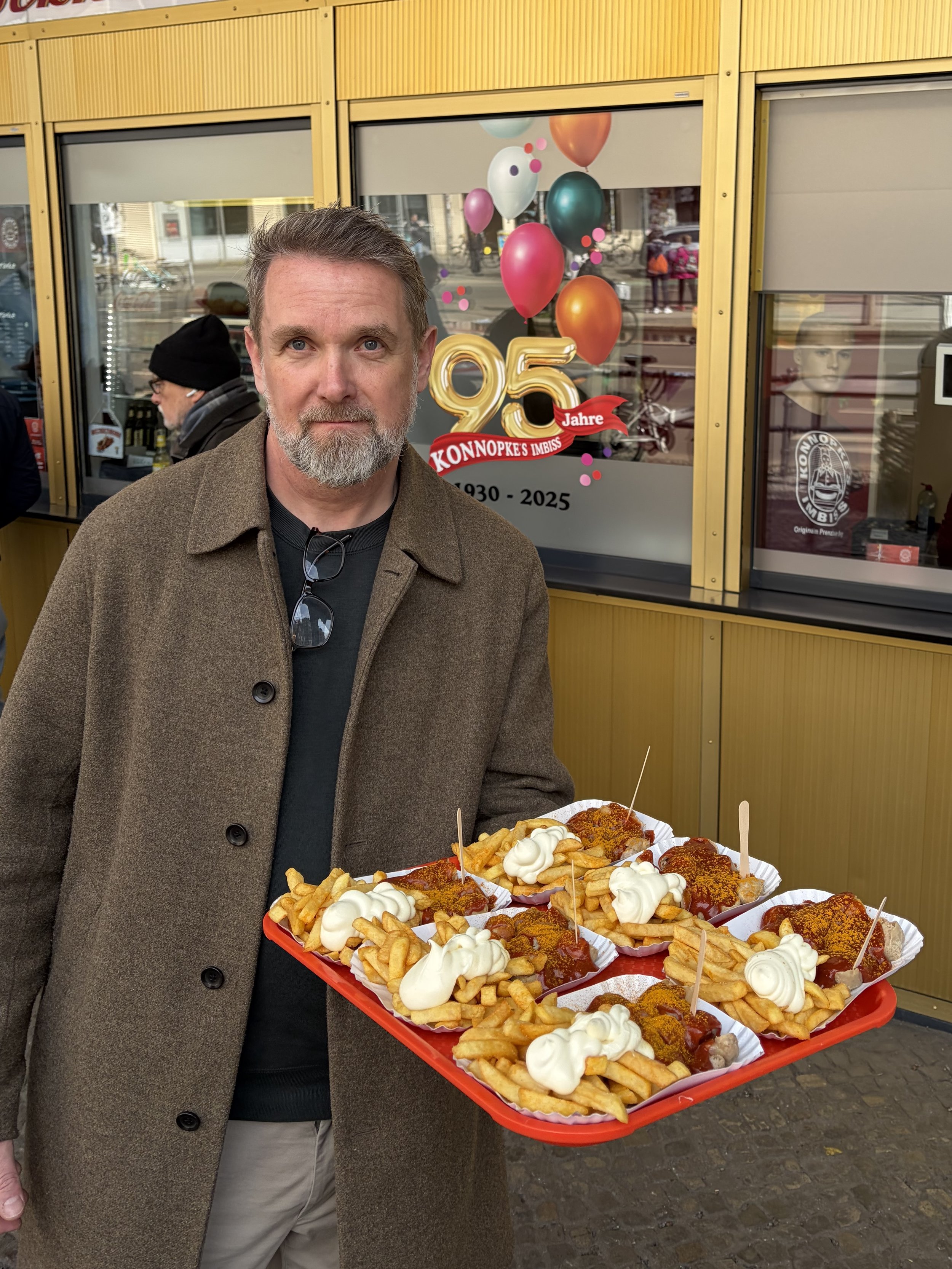
That‘s like asking a parent which one is my favourite child. It depends on where in Germany I am and what time of the year it is as I‘m a big fan of local, simple and seasonal cuisine. If in Hamburg I need to have a Fischbrötchen, ideally a Matjesbrötchen. It’s basically a lightly pickled raw herring in a fresh bread roll with some slices of onion. In Berlin I will always have a Currywurst with Pommes (chips), ideally from Konnopke which has been serving food since 1930. In winter there is nothing better than Käsespätzle, those are generally best in the south of Germany.

Why the Ruhrgebiet?
It may not be the most traditionally beautiful areas but it’s definitely one of the most fascinating areas of Germany with a very strong identity that basically had to reinvent itself after the demise of the coal and steel industry in the late 80s and early 90s. The abundance of abandoned industrial spaces makes a great backdrop for contemporary art and culture. Bernd and Hilla Becher’s Typologies documented a lot of its unusual beauty in the 1960s and 70s so if it’s good enough for the Bechers, it’s definitely good enough for me.
Oh, and it’s only about 30 minutes from where I grew up so I know it well.